Energy & Utilities Process Improvement
How utilities are modernizing wildfire mitigation programs
For many years, wildfire mitigation was viewed primarily as a West Coast issue. Today, that perspective has changed…
Read article


Energy & Utilities Improve Operations
05/12/2026
by Tyler Greaves

Utilities have experienced rapid expansion over the last decade. Urban population growth, the push toward alternative energy, and the advent of AI are driving us towards a future that depends on electrical capabilities, which require a reliable transmission and distribution system. To meet system demands and updated regulations, utilities have undergone significant transformations and frequent reorganizations. This has resulted in complex structures where no single team owns the full picture of a new major initiative, leading to siloed decision making, duplicated efforts, stalled initiatives, and leadership bottlenecks that slow businesses.
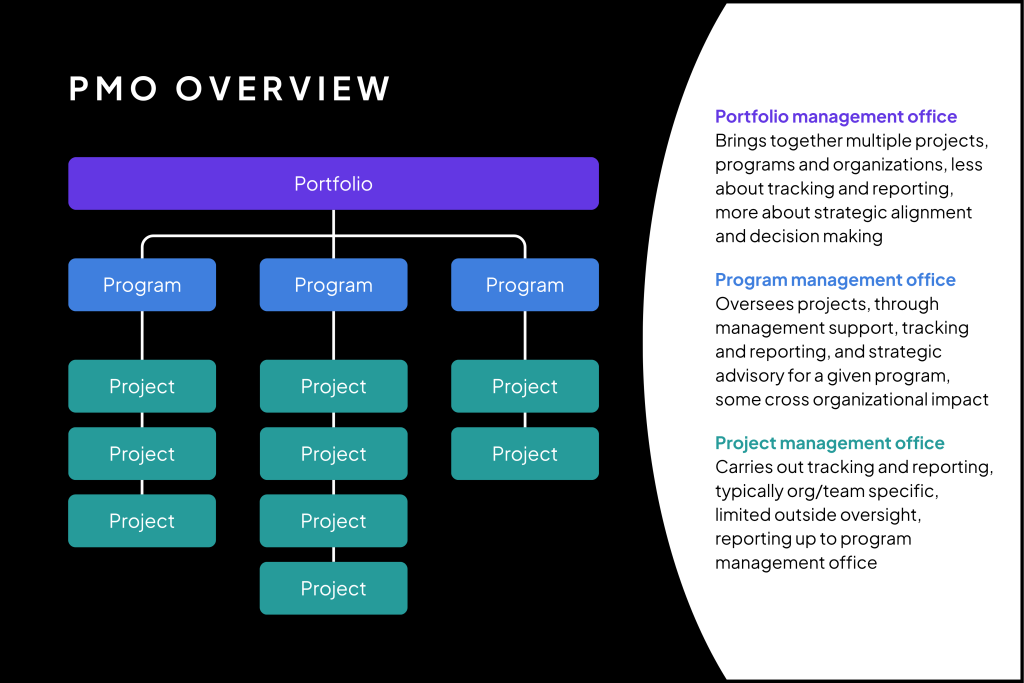
Utilities are increasingly using portfolio management offices (PfMOs) to avoid having business units that operate as independent islands, each with their own priorities, vocabularies, and escalation paths. Without a PfMO, shared initiatives like capital programs and technology implementations can lack a clear owner. This ambiguity creates friction across organizational boundaries, leading to organizations making decisions that impact others without their input—unnecessary escalation, decisions stuck with the wrong people, and leadership time consumed by avoidable issues. This is not a people problem, it’s a structural one.
The traditional project or program management office (PMO) that exists within utilities today supports an organizational or business unit initiative. Both project and program management offices handle scheduling, manage risk logs, track data, report on status, and provide oversight to the teams and efforts they support. They function exactly as they are intended to, keeping project and program managers on track for the initiatives they oversee. Often, they find themselves just as siloed as the organizations they serve, scoped to a single business unit or initiative with limited visibility into what’s happening across the enterprise.
To see the whole picture and support the vision and strategy of a utility’s leadership, another layer of management is needed—one built for the multi-organizational, multi-hierarchical collaboration that today’s environment demands. Enter the PfMO.
A PfMO builds on existing project and program management capabilities, rather than adding in a layer of additional work management. It seeks to funnel the appropriate level of detail from these lower management offices up to higher-level leadership to support decision making that keeps execution moving.
Think of this as moving from tracking and supporting work activity to enabling strategy. The PfMO acts as connective tissue between organizational muscle, translating executive priorities into portfolio-level direction, surfacing unseen interdependencies and resource conflicts, and enabling clear, recurring governance over the body of work.
At the heart of a functioning PfMO is one or many governance committees (GCs). These committees create the space for leaders to align and resolve competing priorities and make decisions that no single team has the total authority or full context to make on their own. They are recurring with a structure that seeks to surface, discuss, and resolve specific items related to the initiative they are tied to. GCs are not created to just review dashboards or status decks. This mechanism breaks down siloed decision making, not by organizational restructuring but by creating a process.
If the PfMO is the what, the GC is the how. GCs are decision making forums, not information-sharing meetings. They have a set framework of topics and decisions they seek to make, with defined members, roles, and cadence, with the documented outcomes and clear owners passed to the project and program management offices for execution.
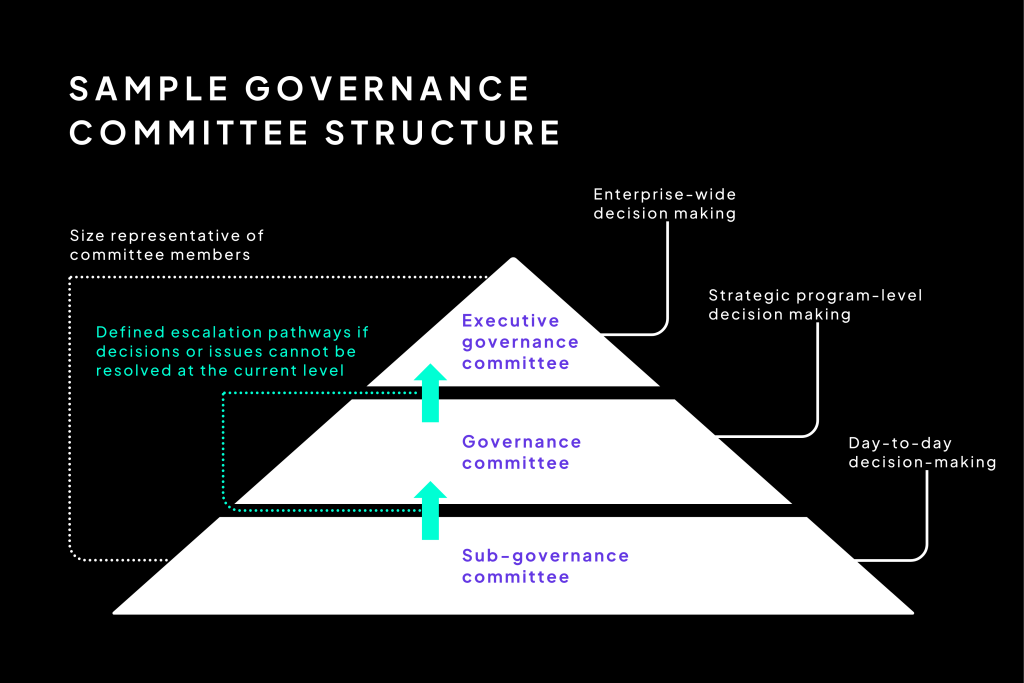
The goal of this approach isn’t a bigger project management team or more tracking and reporting. It’s a strategic partner that facilitates coordinated decision-making, connects organizational layers, creates interdependency visibility, and gives various levels of leadership a clear, recurring mechanism to govern a large, interconnected portfolio of work. Utilities that build this capability are better prepared to operate and navigate all types of complexity.
Ensuring the PfMO and GCs are successful rather than bureaucratic theater requires intentionality. The PfMO is the core facilitator, owning the governance framework that drives organizations and leaders to make decisions and follow through on them. There are a few key tenets that keep it that way:
We understand the uniqueness each company and organization brings to the table. There is no single PfMO model that works for all. If decisions are being unduly escalated, groups are making calls that adversely affect others, teams can’t reach outcomes with their peers, or you want to put structure in place before any of these issues arise, contact a consultant. Let’s discuss what fits best for you.
Business insights
Energy & Utilities Process Improvement
For many years, wildfire mitigation was viewed primarily as a West Coast issue. Today, that perspective has changed…
Read article
Energy & UtilitiesEnhance Customer Experience
The modern utility landscape is defined by rapidly evolving pressures.
Read article
Energy & UtilitiesImprove Operations
Most bid-to-bill initiatives begin with technology decisions, but as business needs evolve to support market shifts,…
Read article

Energy & UtilitiesAI
Utilities across the country are facing an unprecedented strain on their energy grids. To keep pace with this…
Read article

Energy & UtilitiesData & Analytics
You have the data. The problem isn’t technology; it’s the last mile gap between insight and action.
Read article

Energy & UtilitiesAI
The energy and utilities industry is undergoing rapid growth. It’s more important than ever that the energy supply…
Read article