Financial ServicesImprove Operations
Compliance as a strategic investment
In an industry built on trust, reputational strength, and the protection of sensitive data, institutions often choose…
Read article


07/07/2026
by Susanne Turnbo
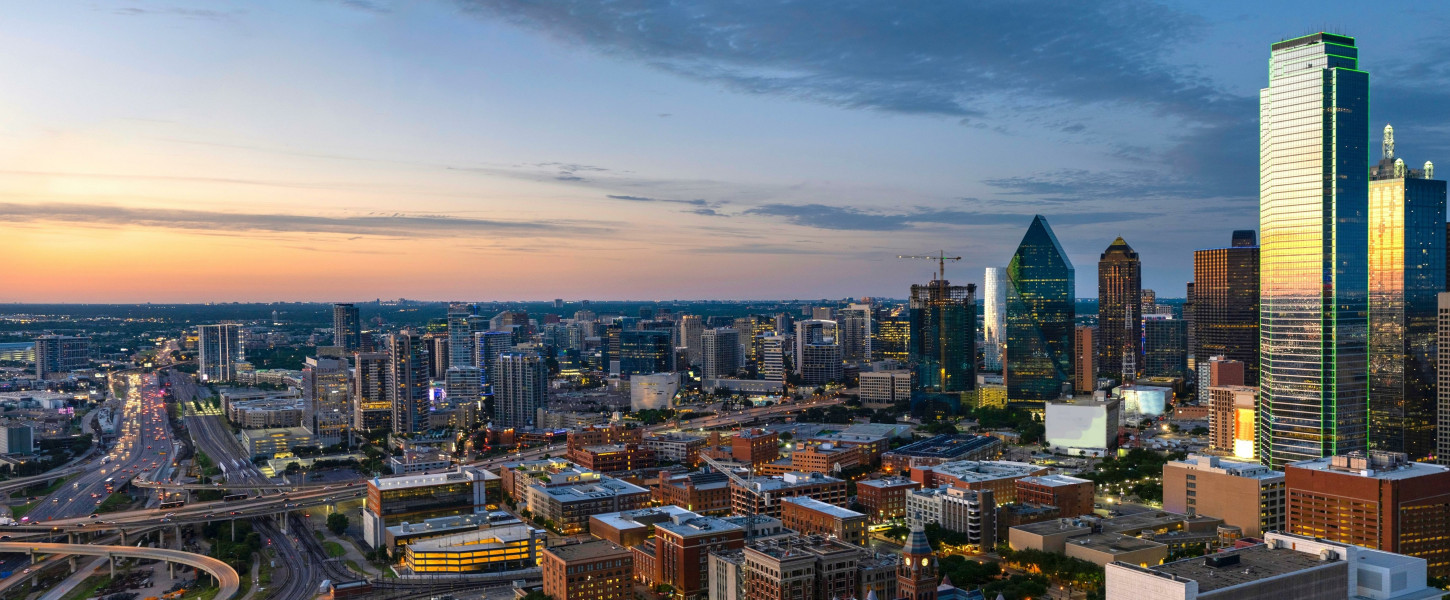
The Texas Stock Exchange (TXSE) launch signals a seismic shift and new era in American public markets. Shifting the paradigm, Y’all Street challenges New York’s de facto position as the U.S. financial nexus. TXSE represents a structural rebalancing, grounding capital formation in a geographic center of economic output.
Y’all Street’s ascent as an economic epicenter is inevitable. Back in 1914, winning the Federal Reserve Bank positioned Dallas as the Southeast’s liquidity and regulatory anchor. In the century to follow, the city attracted infrastructure investment and massive capital with oil as collateral.
Today, the region’s financial environment flourishes with a capital base of banks, private equity, and family offices. The “Great Financial Migration” to the region further catapulted Dallas, which now functions as a “third pillar” of U.S. finance. Dallas-Fort Worth is narrowing the gap with New York and outpacing Chicago as an American banking hub with an estimated 386,000 financial professionals in the city. JPMorgan now employs more employees in Texas than in New York.
With this breadth and depth of economic activity in Texas, it stands to reason that capital infrastructure should be located there too. With its launch, TXSE elevates a long-thriving financial ecosystem. Far from creating something new, it cements the region’s standing as a dominant economic hub.
Unlike other newer exchanges, TXSE is not niche. Rather, it’s a full-scale attempt to loosen the stronghold of NYSE and Nasdaq on American markets. TXSE decentralizes the system, not just geographically, but also structurally and systemically.
Beyond being more affordable than New York, Dallas also competes on cost and proximity to prosperous industries. Faster infrastructure and flexible listing structures further amplify its appeal. The regional identity advantage cannot be overstated.
Public companies have declined nearly 50% since the 1990s. Several factors have driven this trend, including private capital abundance, fewer IPOs, increased M&A, and the high cost of being public. The decline in public companies has resulted in trade-offs. Investors have lost access, while companies have gained flexibility.
TXSE has the potential to address this dilemma. Its value proposition hinges on lowering “IPO tax,” enabling companies to go public earlier. Along with reducing listing costs and simplifying regulations, TXSE is focusing on mid-cap to large-cap issuers. These TXSE efforts to expand the public market are projected to increase participation.
Exchanges build more than markets. They create entire ecosystems. Expect TXSE to attract business, drive economic growth, and raise Texas’s profile as an American financial power player. TXSE branding holds the potential to attract more exchange participation and local investment.
Backed by roughly $300 million in infrastructure investment and major institutions, including BlackRock, JPMorgan, and Citadel, TXSE opened powerfully. Its launch has already spurred considerable job creation in the finance, legal, compliance, and tech sectors. As the exchange grows, so will the opportunities.
When it comes to the TXSE, don’t expect one-size-fits-all gains. We know that early success hinges on credibility, and both size and geography play heavily in determining opportunities. Companies looking to pursue an IPO will also find a third option in the Dallas-based exchange.
The exchange poses an IPO alternative to acquisition. Don’t sell or stay private. Go public locally. Companies on the move can become anchor tenants on the TXSE, versus one of many on the NYSE. With TXSE, Texas further challenges Wall Street’s dominance and vies for national influence.
Momentum is building this summer in Dallas, with the phased TXSE rollout. Trading begins in July, followed by listings in the fall and the full IPO ecosystem in 2027.
While corporate listings are confidential and few are publicly confirmed, we can expect ETFs to start. Dual listings will then make up the first wave. This matters because reputation depends on early anchors. Over the next 6-12 months, watch for ETF growth, the first major dual listings, and an anchor issuer announcement.
Ultimately, the rise of TXSE signals a simple but powerful shift. Today, capital is no longer tied to geography. It is moving to meet growth.

Susanne Turnbo
Susanne joined Sendero in 2007 as one of the firm’s first employees. Starting as a manager, her impressive work enabled …
Business insights
Financial ServicesImprove Operations
In an industry built on trust, reputational strength, and the protection of sensitive data, institutions often choose…
Read article
Financial ServicesAI
Cost optimization is only the starting point in banking mergers and acquisitions.
Read article

Financial Services Process Improvement
The gap between your program and examiner expectations is wider than you think.
Read article

Financial ServicesAI
Unlocking Agentic AI’s true value requires a sturdy foundation and careful evaluation to avoid unintended consequences,…
Read article

Financial ServicesPlatform & Products
Weak financial systems integration slows growth in markets where speed and confidence matter most. Integration chaos…
Read article

Financial ServicesAI
Hyper-personalization is becoming a critical differentiator in financial services. AI and broader digital…
Read article