HealthcareEnhance Customer Experience
Research validates patient experience, but not patient trust
Across patient experience research programs, the data looks positive. However, when patient trust isn’t measured, it…
Read article


10/12/2021
by Bryant Robinson and Corinne Owen

Ask yourself: If I had a medical emergency and I could go to any hospital, where would I want to go? Do you have an answer? If so, it’s probably based on the proximity and how fast you could get that hospital. In this instance, your past experiences probably don’t come into the picture.
But what about those times when the encounter is not rushed, and you are seeking a preventative visit, a wellness service, or even a second opinion? What factors go into making that decision? In this scenario, people are becoming more selective when it comes to spending time and resources to patronize a healthcare provider. They read reviews, check social media posts, ask friends and family, and perform countless online searches. And that’s just for the first appointment.
Brand loyalty is something for which every healthcare system should be striving, but focusing only on patient loyalty and not including the customer experience is a limiting factor. Healthcare systems should want to be top of mind over all other organizations and the first choice in their potential patients’ minds. This concept is a proven key success factor for any business, and healthcare organizations are not exempt. When developing a strategy to establish and build brand loyalty, healthcare systems first need to consider the total user experience from both the patient and customer perspectives:
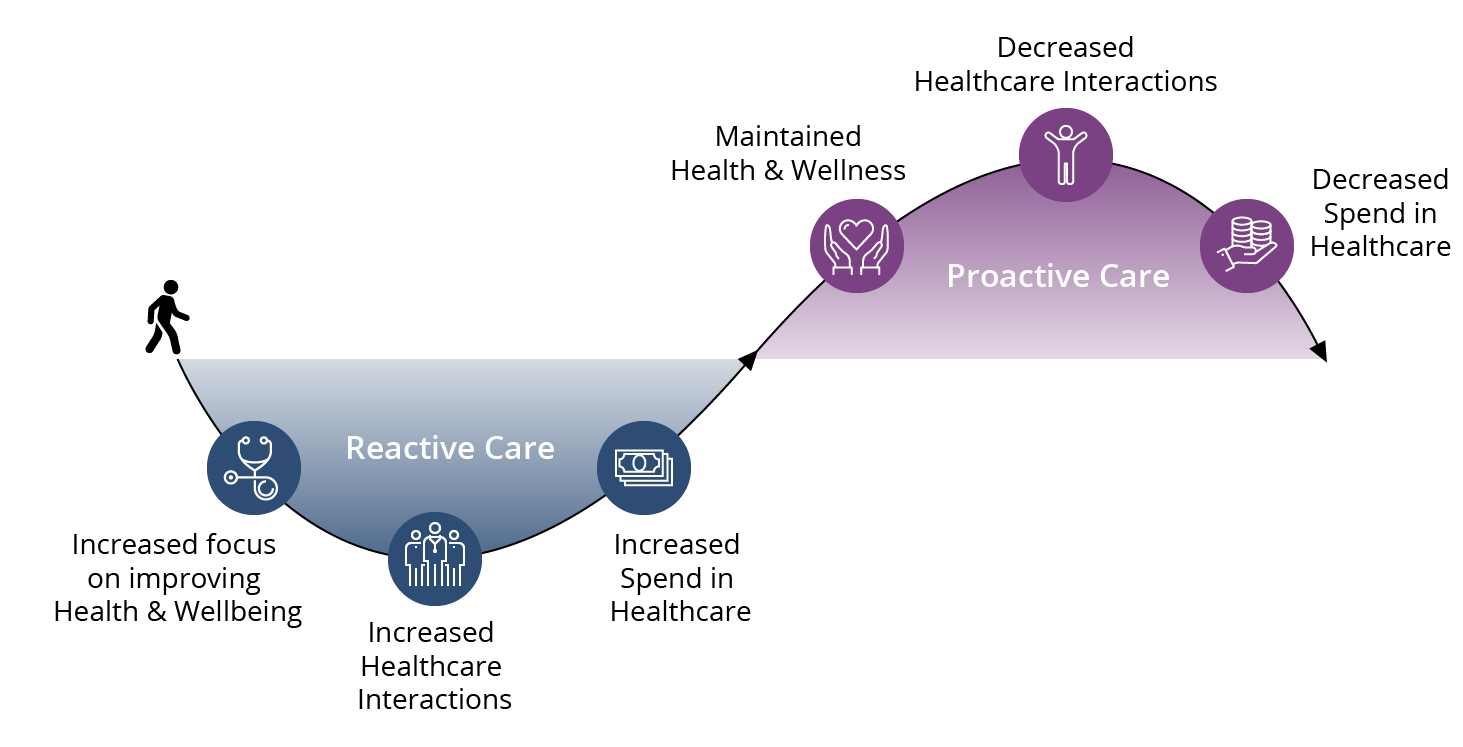
So how can healthcare providers develop loyal customers and be consistently top of mind at all times? An important consideration is to understand how they engage with patients differently along their healthcare journeys. A person’s healthcare needs exist on a spectrum of reactive and proactive states, and the associated healthcare provider engagement varies.
In situations of reactive care, a person’s choice of healthcare is driven by medical condition, proximity, and urgency of need. While the customer experience is still important, the patient experience is most critical in this situation. A person is not likely to change providers or systems if they are receiving great medical care and are experiencing:
Healthcare providers who offer exceptional customer experience and great patient care leave their patients with an overall positive experience, making them more likely to return. Also, the amount invested to keep people engaged during this time provides a baseline for the expected return on investment (ROI) in times of proactive care.
In situations of proactive care, a customer is more likely to shop around for physicians or healthcare providers. Both the customer experience and the patient experience are weighed more equally in proactive care than in the reactive care state leading to:
Healthcare providers who focus on engagement and patient education between health & wellness visits can become a preferred choice. Patients will feel a connection to their healthcare provider and believe they are a valued piece of the larger healthcare system.
This is where the Healthcare Brand Loyalty Framework comes into play. To establish loyalty, healthcare providers must have objectives for engagement that are flexible, customizable, and measurable.
1. Acquire and curate patient data
Healthcare providers need a data-informed approach supported by an ecosystem of tools and technologies to acquire, curate, and augment the data required to define patient loyalty. This includes a combination of clinical, claims, operational, and customer data organized by the specific service lines offered and the specific locations of the encounters.
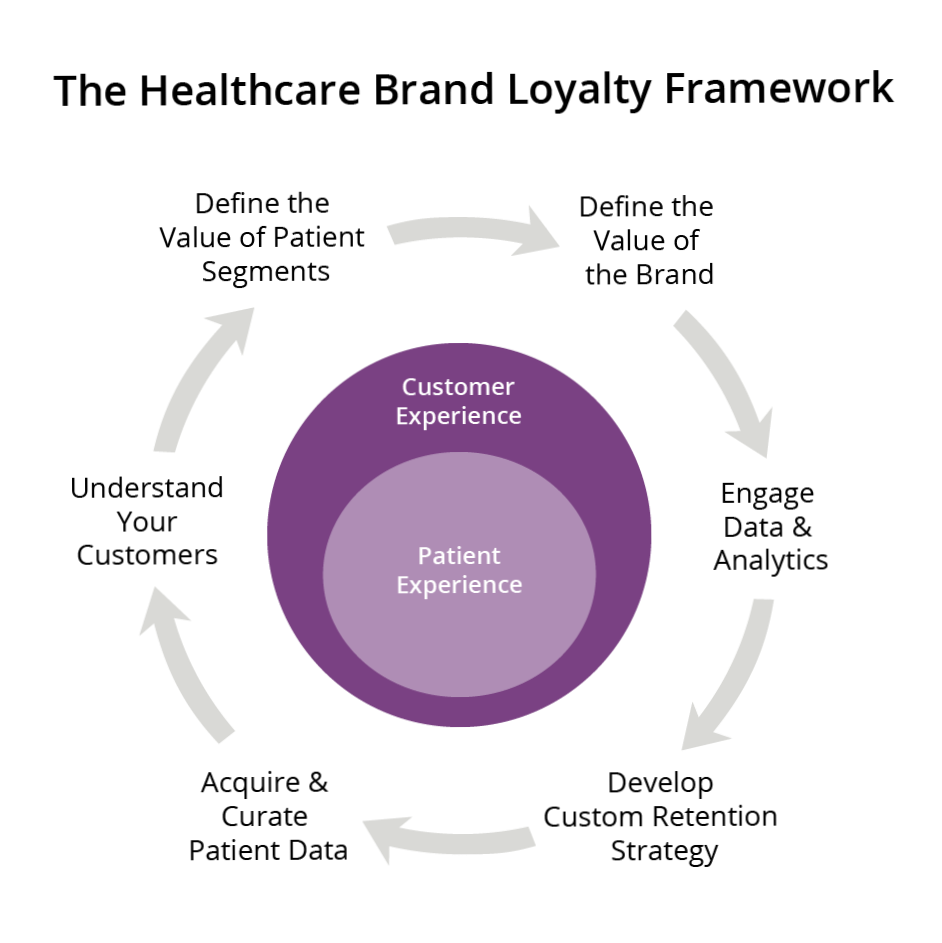
2 . Understand your customers
Healthcare providers must identify, categorize, and analyze their patient population across every service line in the system and across every type of encounter. They must take a programmatic approach to classify patients based on common characteristics such as demographics, spending patterns, attitudes, and behaviors. Tools such as satisfaction surveys can provide complementary qualitative metrics to help healthcare providers understand the social sentiment of their brand. This consumer-centric approach to patient segmentation will provide insights to who your customers are and the value they bring to you. Patient segmentation helps healthcare providers to identify the characteristics of their ideal, most loyal customers.
3. Define the value of patient segments
Once patients are segmented, you can determine the brand loyalty they have towards your products and services. This is accomplished through analyzing measures such as Share of Wallet, or how much customers are spending in your healthcare system compared to their entire spend on healthcare. Determining your consumer economic mix answers the question “how do we make money” and is fundamental to understanding the actual value customers bring into your system.
4. Define the value of the brand
An organization’s brand creates a sustainable competitive advantage and distinguishes their products and services. Geographic proximity and medical reputation are historical drivers that healthcare providers have banked on to claim patient loyalty. But in today’s climate of unlimited choices and new market disruptors, they must now understand how their life saving, preventative, and wellness services have an impact on the community-at-large. They must identify the source of any negative experience and address it; otherwise, those experiences can diminish the value that is brought to patients.
5. Engage data & analytics
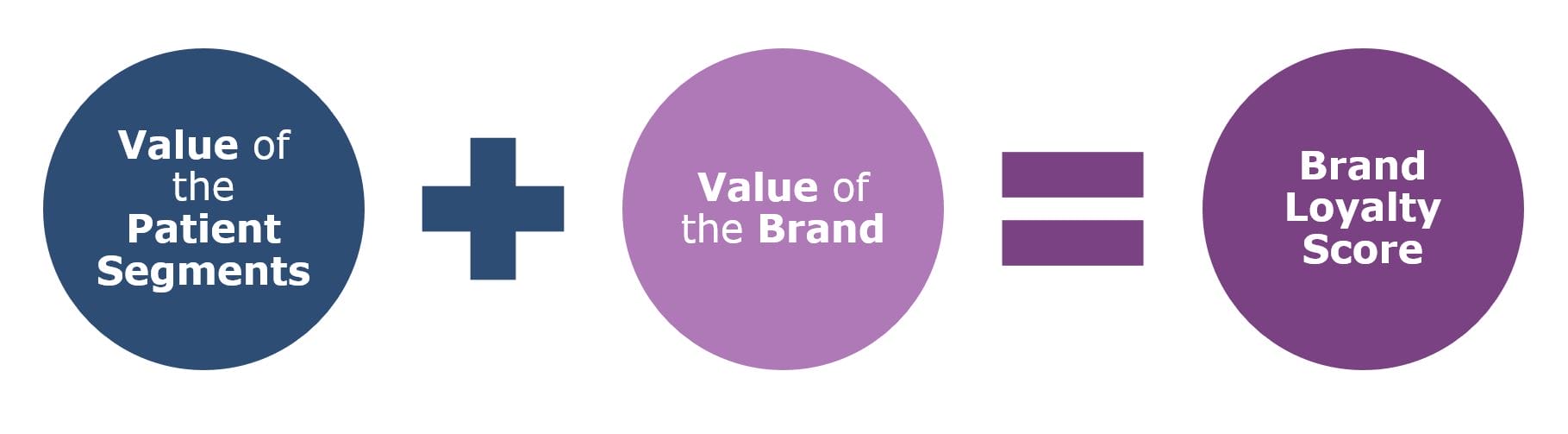
Performing advanced analytics on this data generates measurable KPIs such as Brand Affinity, Brand Equity, and Net Promoter Score. The resulting set of metrics becomes the basis for deriving both sides of a loyalty equation:Analyzing these insights over time will shed light into the loyalty indicators applicable to a specific organization. The resulting loyalty score can be applied historically to show past performance and can be used as a leading indicator to help predict future loyalty in specific patient segments.
6. Develop a custom retention strategy
Healthcare providers can transform their patients into customer advocates by producing memorable encounters based on top-notch products, services, and unmatched customer support. Whether in times of increased health and wellness or when patients just need great care, understanding what causes customers to be loyal requires a purposeful approach. By leveraging a data driven loyalty score, providers can build a comprehensive strategy to retain existing patients and capture new patients.
If you were able to ensure that both patient and customer care were experienced equally, how would you in turn measure brand loyalty for your organization? With so many disruptors in the healthcare industry, how do you stay relevant and attract a loyal customer base?
Do you have questions about developing your Brand Loyalty approach? Contact a consultant today using the “Contact us” button at the top of the page.

Bryant Robinson
Bryant draws on more than 25 years of consulting expertise, serving as a trusted advisor to executive teams and guiding …
Business insights
HealthcareEnhance Customer Experience
Across patient experience research programs, the data looks positive. However, when patient trust isn’t measured, it…
Read article
HealthcareAI
There are several key factors that healthcare organizations should consider when it comes to keeping up with the race…
Read article

Healthcare
While private equity investment in healthcare is valuable, providers should familiarize themselves with alternative…
Read article

HealthcareOptimize Technology
Advancements in health tech have allowed both patients and clinicians to experience the benefits of digital…
Read article

Healthcare
The new cms-0057-f ruling will make many positive changes for the healthcare practitioners and patients, but is your…
Read article

HealthcareWorkforce Technology
In the dynamic landscape of healthcare, initiatives traditionally are introduced through pilot programs, allowing for…
Read article